
JWT
- JSON Web Token
- JSON Web Tokens are an open, industry standard RFC 7519 method for representing claims securely between two parties.
- https://jwt.io
Structure
-
Header
-
Payload
-
Signature
-
xxxxx.yyyyy.zzzzz -
Header
- type of the token
- hashing algorithm
- Base64Url encoded
json{
"alg": "HS256",
"typ": "JWT"
}
- Payload
- three types of claims: reserved, public, and private claims.
- Reserved claims: -iss* (issuer), exp (expiration time), sub (subject), aud (audience), and others.
- Public claims: IANA JSON Web Token Registry or a collision resistant namespace
- Private claims: custom claims created to share information
json{
"sub": "1234567890",
"name": "John Doe",
"admin": true
}
- Signature
jsHMACSHA256(
base64UrlEncode(header) + "." +
base64UrlEncode(payload),
secret)
How jwt works
- HTTP Header
textAuthorization: Bearer <token>
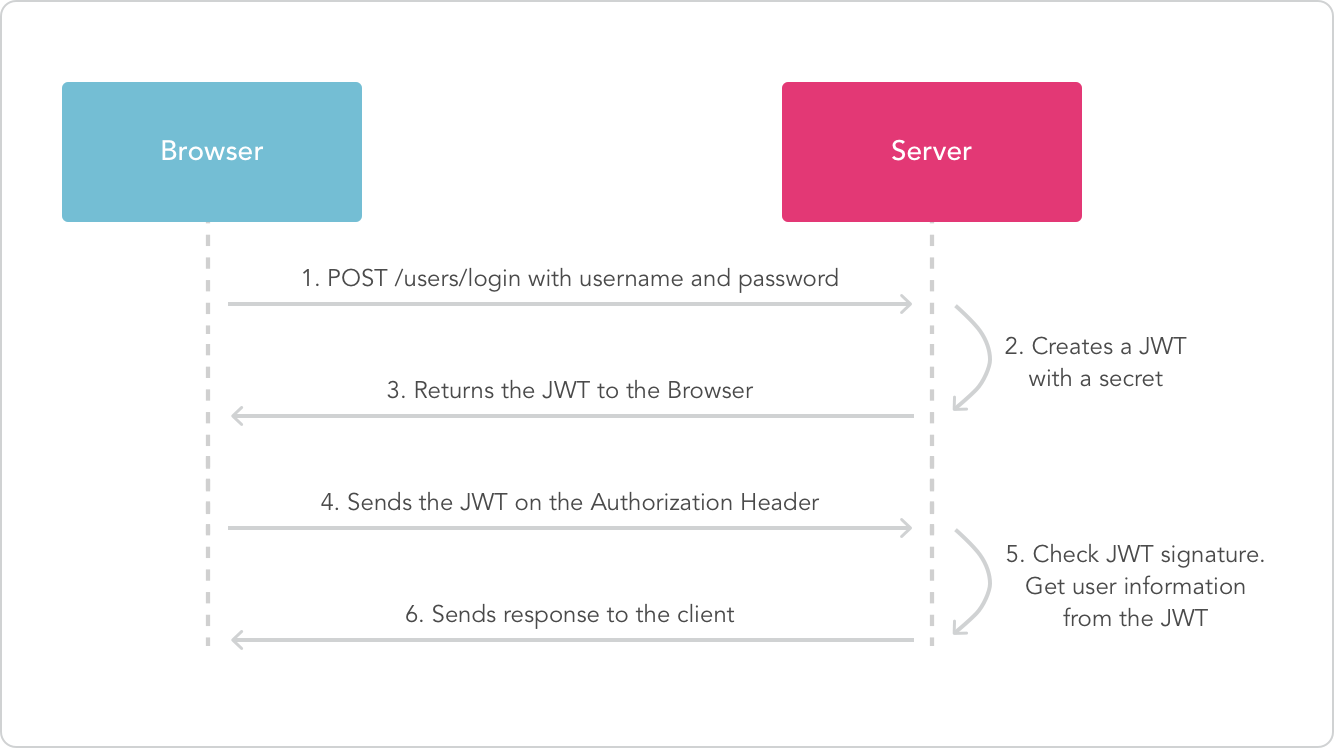
install
npm install jsonwebtoken
Usage
jwt.sign(payload, secretOrPrivateKey, [options, callback])
example
- code from https://www.jsonwebtoken.io/
npm i njwt
jsconst uuid = require('uuid');
const nJwt = require('njwt');
const claims = {
"sub": "1234567890",
"name": "John Doe",
"admin": true,
"jti": "f0b5fc9e-67d8-43f7-858a-a7cc5f0cae66",
"iat": 1566783214,
"exp": 1566786814
}
const jwt = nJwt.create(claims,"secret","HS256");
const token = jwt.compact();
console.log(token);
jsconst nJwt = require('njwt');
const result = nJwt.verify("eyJ0eXAiOiJKV1QiLCJhbGciOiJIUzI1NiJ9.eyJzdWIiOiIxMjM0NTY3ODkwIiwibmFtZSI6IkpvaG4gRG9lIiwiYWRtaW4iOnRydWUsImp0aSI6ImYwYjVmYzllLTY3ZDgtNDNmNy04NThhLWE3Y2M1ZjBjYWU2NiIsImlhdCI6MTU2Njc4MzIxNCwiZXhwIjoxNTY2Nzg2ODE0fQ.CZSC2L3vB0dGlH_3EUTt_98iR70gMsDalOF-uuNvmPk", "secret", 'HS256');
console.log(result);